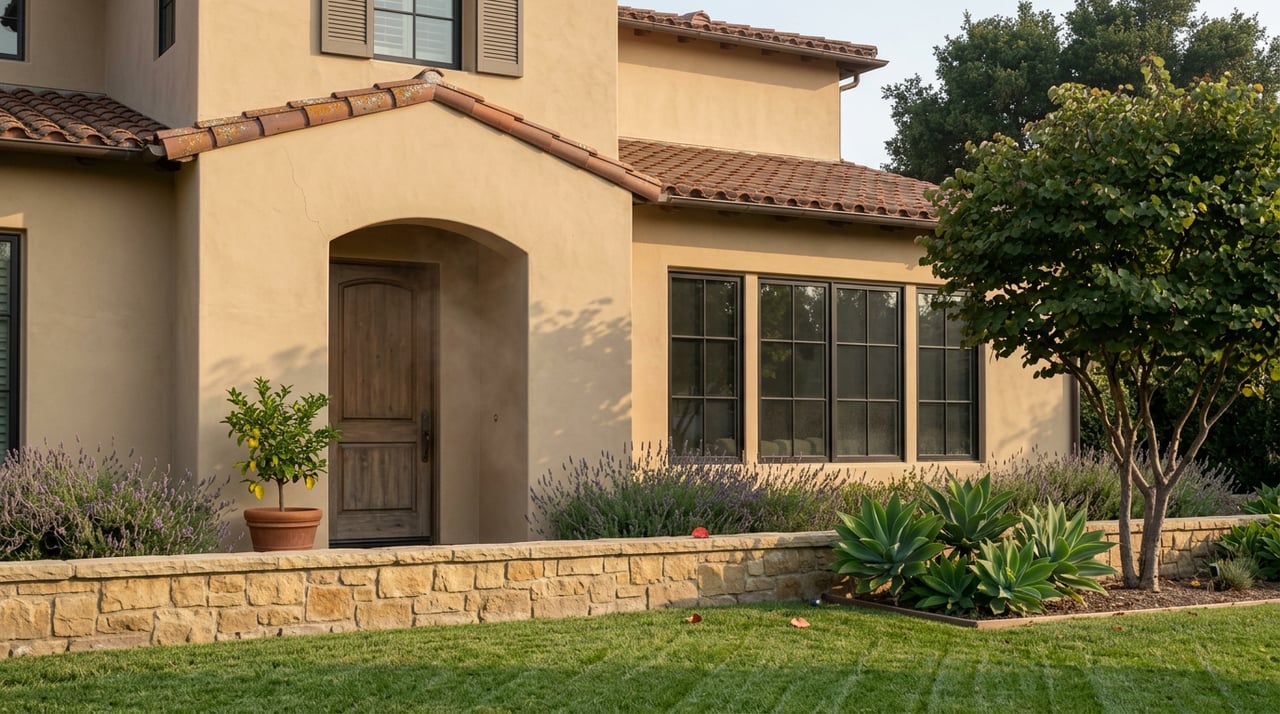
Consider a successor trustee handling her late father's home in Muirlands. The house has been in the family trust since 2004. She's never lived there, never held title in her own name, and assumes that because the trust owns the property, she can skip the disclosure paperwork entirely. Her agent mentions something about a "trust exemption." She lists the house as-is, sells it within three weeks, and moves on with her life.
Two years later, the buyer discovers a slab leak that soaked the crawl space for months before the sale closed. He sues. The trustee's defense rests entirely on that exemption she never actually verified.
This scenario plays out across California more often than most sellers realize, and La Jolla's trust and estate sales are especially exposed to it. The exemption exists. It just covers a far narrower set of circumstances than the shorthand version everyone repeats.
The Exemption Almost Nobody Actually Clears
California Civil Code Section 1102.2(d) does exempt certain fiduciary sales from the standard Transfer Disclosure Statement. The statute reads:
"Sales or transfers by a fiduciary in the course of the administration of a trust, guardianship, conservatorship, or decedent's estate."
That's the part everyone quotes. What gets left out is the very next sentence, which disqualifies a huge share of the trust sales that actually happen: the exemption does not apply if the trustee is a natural person, the trust is revocable, and that trustee was a former owner of the property or lived there within the preceding year, according to legal analysis published by the Daily Journal.
In plain terms, you have to clear two separate gates before the exemption applies to you, and both gates have to open.
The Two Questions That Actually Decide Your Disclosure Duty
| Question | If the answer disqualifies you |
|---|---|
| Is this sale part of formal administration of a trust, guardianship, conservatorship, or decedent's estate? | If it's a routine sale by a living trust that hasn't triggered administration, you're not covered and must complete the full TDS. |
| Are you a natural-person trustee of a revocable trust who was a former owner or lived in the property within the past year? | If yes to any part of this, the exemption doesn't apply to you, even if the first question checked out. |
The BPE Law Group has walked through this exact test in detail: a trustee has to identify whether the transaction is a "covered transaction" before even getting to the second question, and trust administration is generally defined as management of the trust for the benefit of beneficiaries after the person who created the trust has died. A trustee selling on behalf of a still-living settlor, or handling routine property management rather than post-death administration, doesn't get the exemption at all.
Why This Trips Up La Jolla Trustees Specifically
La Jolla's ownership pattern makes the second gate a common failure point. A large share of trust-held property here follows a familiar arc: an aging parent places the home in a revocable living trust decades ago, an adult child moves in or nearby to help with caregiving in the final years, and that same child becomes successor trustee when the parent dies. That child is a natural person, the trust is revocable, and if they occupied the home within the past year, the exemption is off the table by statute, no matter how the sale gets marketed.
There's a second reason La Jolla amplifies this issue: the numbers involved are large enough that families lean hard on trust structures to avoid probate, but the same high values that motivate the trust also motivate a lawsuit if something goes wrong. La Jolla's median home value has consistently priced above California's Proposition 19 parent-child exclusion cap of $1,044,586 over the factored base year value, according to a 2026 breakdown from La Jolla estate planning firm Opelon LLP. When an inherited home is worth several million dollars and the buyer's recourse after closing is a lawsuit against the trust or the trustee personally, the stakes of getting the disclosure question right are not theoretical.
What You Still Owe Even If You Genuinely Qualify
Clearing both gates doesn't mean disclosure disappears. It means the specific TDS form isn't required. Two obligations survive regardless:
Known material defects still have to be disclosed. California case law, specifically the Lingsch standard cited in the Daily Journal's analysis of exempt fiduciary sellers, requires disclosure of any known defect that would materially decrease the property's value, along with defects that aren't apparent or within a buyer's reach to discover through ordinary diligence. Not knowing isn't the same as having no obligation. Reviewing whatever documentation, inspection reports, or repair records the estate holds is part of the job.
"As-is" language can't waive the duty to disclose. Civil Code Section 1102.1 states plainly that delivery of a transfer disclosure statement can't be waived in an as-is sale, a principle reinforced in Loughrin v. Superior Court (1993) 15 Cal.App.4th 1188, where the court held that sellers can't use contract terms to sidestep their duty to disclose known material defects, as detailed by Lucas Real Estate. A related case, Assilzadeh v. California Federal Bank (2000) 82 Cal.App.4th 399, shows the flip side: sellers who did notify a buyer of a known issue before close of escrow, in that case a construction defect lawsuit, satisfied their obligation even though the transaction was statutorily exempt. The lesson from both cases points the same direction. Disclose what you know, document that you disclosed it, and don't rely on boilerplate contract language to do the work for you.
The California Association of Realtors addresses this gap with an Exempt Seller Disclosure form, built specifically for sellers who qualify for the statutory exemption but still need a vehicle to put known issues, including something like a death on the property within the past three years, in writing.
The Court, the Clock, and the Real Cost of Getting the Structure Wrong
None of this exists in a vacuum. La Jolla estates that end up in probate rather than trust administration are routed to the San Diego Superior Court Central Division at the Madge Bradley Building, roughly 12 miles from La Jolla, and that route typically runs 9 to 18 months with public filings, compared to trust administration, which can distribute assets within 60 days and stays private, per Opelon LLP's summary of California probate timelines. The fee difference is just as concrete. Combined statutory attorney and personal representative fees on a $3 million La Jolla home plus other assets can approach $86,000 under the sliding scale set by Probate Code Sections 10800 and 10810, according to Opelon's published fee calculations.
That gap is exactly why so many La Jolla families use revocable trusts in the first place, and exactly why the disclosure question matters so much once the property actually goes to market. A trust avoided the court, the delay, and a chunk of the fees. It did not avoid the seller's duty to tell a buyer what's wrong with the house.
The Team a Trustee Actually Needs
Selling an inherited or trust-held La Jolla property well means coordinating a short list of specialists rather than trying to answer legal questions alone. Certified trust and probate specialists based in or near La Jolla, such as the Law Offices of Robin L. Cahill, which focuses on trust administration, elder law, and conservatorship matters, or Cross Law APC, a State Bar-certified specialist in estate planning, trust, and probate law located in La Jolla, are the right first call when the exemption question is unclear. On the property side, local estate liquidation firms like La Jolla Estate Liquidators on Fay Ave, which works directly with executors, trustees, and probate attorneys to clear and stage a home for sale, handle the physical side of a transition that often overlaps with the legal one.
That coordination, attorney, fiduciary, and agent working from the same set of facts, is where a trust sale actually goes smoothly. It's also where costly assumptions, like assuming the exemption applies without checking both parts of the test, get caught before they become a lawsuit.
Frequently Asked Questions
If the trust is irrevocable, does the exemption automatically apply? Not automatically, but the disqualifying condition in Civil Code 1102.2(d) specifically targets revocable trusts where the trustee was a former owner or occupant. An irrevocable trust removes that particular disqualifier, though the sale still has to qualify as a covered transaction in the first place.
Does hiring a real estate agent change any of this? No. The disclosure duty belongs to the seller, whether that seller is an individual or a trustee. An agent can help identify what needs disclosing and coordinate the paperwork, but the underlying obligation under California law doesn't shift based on representation.
What if the trustee genuinely doesn't know about a defect? The common law duty applies to known defects and defects a buyer couldn't reasonably discover on their own. A trustee who has never lived in the property and has no personal knowledge of its condition has a different disclosure posture than a former resident, but reviewing available records, past repair invoices, and any inspection history before listing is still the responsible move.
Selling a home that's been held in trust for years, or one that's suddenly become part of a probate estate, involves more moving pieces than a typical sale, and getting the disclosure question wrong doesn't surface until long after the money is gone. If you're a trustee, heir, or fiduciary weighing a La Jolla property and want a second set of eyes on how the sale should be structured, Barbara Leinenweber has spent years working alongside attorneys, fiduciaries, and families through exactly this kind of transition. Let's Connect.